Location: Home >> Detail
Crop Breed Genet Genom. 2026;8(2):e260012. https://doi.org/10.20900/cbgg20260012
 ,
Phullara Kole 1,2
,
Phullara Kole 1,2
1 Department of Genetics and Biochemistry, Clemson University, Clemson, SC 29634, USA
2 Prof. Chittaranjan Kole Foundation for Science & Society, 1399 Panchpota, Garia, Kolkata 700152, West Bengal, India
* Correspondence: Chittaranjan Kole
Incidence of chronic diseases including cancer and diabetes is increasing globally. Fruits and vegetables are potential sources of functional phytochemicals for prevention and management of these diseases. Bitter gourd, Momordica charantia, a popularly cultivated vegetable, contains a number of bioactive compounds with well-documented medicinal properties. These include cucurbitacin-B with proven anticancer activities, and charantin and plant insulin having demonstrated antidiabetic properties. However, the popularly grown varieties of bitter gourd are reportedly poor in the content of these phytomedicines and used only for vegetable purposes. We utilized a germplasm of wild bitter gourd, M. charantia var. muricata for the development of eight medicinal varieties including CBM3, CBM6, CBM10, CBM12, CBM13, CBM18, CBMH10 and CBMH12 in this crop, and evaluated the contents of these three phytomedicines in their fruits. We report here on the botanical description of these varieties, and phenotypic fruit traits and comparative performance of these varieties along with 17 popularly cultivated varieties with regard to the content of the three phytomedicines. We also report on the comparative performance with regard to fruit weight among the 25 varieties, and correlation of the contents of the three phytomedicines inter se and with fruit weight. Finally, we suggest five varieties including CBMH10, CBMH12, CBM12, CBM10 and CBM13, in that order, for consumption of their fruits as a source of functional foods for prevention and management of cancer and diabetes, and also as a source for extraction of these three phytomedicines for further studies on their pharmaceutical potential.
Prevalence of chronic diseases including cancer and diabetes is increasing globally. There were about 20 million new cases of cancer with 9.7 million deaths due to it in 2022 (https://pressroom.cancer.org/GlobalCancerStatistics2024). Similarly, 589 million adults were living with diabetes in 2024 and the number of deaths due to it was 3.4 million (https://diabetesatlas.org/). A number of crop plants under different commodity groups, specifically fruits and vegetables, are known to contain anticancer and antidiabetic bioactive compounds [1]. Hence, utilization of nutraceutical-rich crops, such as fruits and vegetables as a source of medicinally active phytochemicals is a potential alternative for prevention and management of these diseases [2].
Bitter gourd, also known as bitter melon or balsam pear, (Momordica charantia L.), is a potential cucurbit vegetable crop that can be popularized as a functional food crop. This plant contains over 60 phytomedicines active against over 30 diseases [3]. Several medicinal properties of bitter gourd including antidiabetic, anticancer, antitumor, antileukemic, antioxidant, antiulcer, anti-inflammatory, hypocholesterolemic and hypotriglyceridemic properties are well-documented in research [4]. Almost all parts of bitter gourd, primarily the fruits, contain cucurbitacin-B that have proven anticancer actions [5]. They also contain charantin and plant insulin (syn. p-insulin, polypeptide-p), that have clinically demonstrated hypoglycemic and antihyperglycemic activities and established beneficial effects on diabetes [6]. Plant insulin can control both type I and type II diabetes [7]. However, the popularly cultivated varieties of bitter gourd have lower content of phytomedicines [8] and are used only for vegetable purposes.
The traditional breeding programs in this crop aimed mainly at fruit yield along with quality, maturity time, fruit characteristics, economic traits, phytonutrients content etc. by utilizing local landraces and a number of varieties have been developed with improvement in these characters [9,10]. However, available literature does not evidence for any report on the development of varieties with enhanced content of phytomedicines in this crop. Assessment of bitter gourd germplasms has evidenced for sufficient genetic variation with regard to agro-morphological and fruit-yield traits [11–13]. However, only limited germplasms exhibited sufficient genetic variability with regard to bioactive compounds required for genetic improvement [14–18].
The wild crop relatives of Momordica including M. charantia var. muricata (Willd.) Chakrav., M. dioica Roxb. ex Willd., M. sahyadrica Joseph and Antony, M. subangulata Kuroda and Habe, M. cochinchinensis (Lour.) Spreng., M. balsamina L., M. cymbalaria Hook. f., etc., possess wide genetic diversity for biotic stress resistance, abiotic stress tolerance, enhanced nutritional quality, high yielding traits, rare sex forms, unique fruit quality traits, etc. [19]. Among these, M. charantia var. muricata is considered as the progenitor of bitter gourd, M. charantia var. charantia, and is its closest wild allied species [20,21]. We, therefore, explored a germplasm established through the collection from wildly grown bitter gourd plants belonging to the botanical variety M. charantia var. muricata (Willd.) Chakrav. (syn. M. charantia var. abbreviata Ser., M. muricata Willd.) for development of varieties with high contents of three anticancer and antidiabetic phytomedicines, mentioned earlier, and developed eight varieties, and report here. A compendium with comprehensive reviews on 50 crop plants belonging to diverse crop commodity groups provided the information on breeding for various nutraceuticals [1]. However, no crop variety was reported to be developed only as a source of phytomedicine, i.e., for ‘medicinal’ purposes. We have, therefore, performed breeding in wild bitter gourd with the sole objective to develop ‘medicinal crop-varieties’.
Since the weight of fruits is an important factor of total yield of bitter gourd [22] and thereby the total content of phytomedicines in each fruit, we studied the performance of these eight varieties along with 17 varieties grown popularly in six countries for ‘vegetable’ purposes with regard to both phytomedicine content and fruit weight, and also the nature and extent of correlation of the content of these three phytomedicines inter se and with fruit weight. This facilitated selection of the ideal varieties for consumption of their fruits and fruit products as a source of functional foods for prevention and management of cancer and diabetes and for use as a source for extraction of these phytomedicines for future pharmaceutical and bioavailability studies.
A germplasm of wildly grown plants of bitter gourd belonging to Momordica charantia var. muricata (Willd.) Chakrav., an allied botanical variety of the domesticated bitter gourd botanical variety, M.c. var. charantia L. was established by us previously at the Clemson University. Six plants from this germplasm were used for breeding of the first six medicinal varieties used in this study. Two of these medicinal varieties and a popularly grown variety with the heaviest fruits, Taiwan White, belonging to M.c. var. charantia L. were used for crossing to develop two hybrids. These eight varieties were grown in three consecutive times, called hereinafter as environments, under controlled conditions in a greenhouse following Complete Randomized Design with four replications along with 17 popularly grown vegetable varieties.
Recording of Botanical Descriptions and Fruit Phenotypic TraitsMorphological characters on mature plants, leaves, flowers, fruits and seeds extracted from ripen fruits were recorded visually in the greenhouse. The quantitative data for leaves, flowers, fruits and seeds were recorded from the average of ten replicates of the corresponding plant parts.
The four fruit phenotypic trats including color, surface texture, luster and shape were recorded on visible observation in the greenhouse. The apparent size categories were derived arbitrarily from the average fruit weight of fruits as >1–25 g Very small, >25–50 g Small, >50–75 g Medium, >75–100 g Large and >100 g Very Large.
Recording of Data for Fruit SizeThe data for fresh fruit weight of the 25 varieties for the four replications were derived from average over the three environments and used for statistical analysis.
Extraction and Quantification of PhytomedicinesFive fresh green fruits from each of the 25 varieties for the four replications in each environment were randomly selected and used for lyophilization. The freeze-dried powders of the three environments were pooled for each variety and each replication. The powders of the first two replications for each variety were pooled to derive the one replication for analysis. Similarly, the powders from the other two replications for that variety were pooled to derive another replication for analysis.
Quantification of the contents (mg/g) of one anticancer phytomedicine, cucurbitacin-B, and two antidiabetic phytomedicines, charantin and plant insulin, was done by HPLC analysis of the pooled lyophilized powders in two replications as described above and expressed in terms of mg/g of lyophilized powder. The detailed methods of extraction and quantification are described elsewhere [23].
Statistical AnalysisStatistical analysis of variation in content of the phytomedicines was done by analysis of variance (ANOVA) following Completely Randomized Design (CRD) with two replications as mentioned above. Similar statistical analysis was done for fruit weight also but with four replications using averaged data over three environments as described earlier. The varietal effects were compared post-hoc using Duncan’s Multiple Range Test (DMRT) and assigned alphabetical grouping ranks. Correlation analysis was done following routine statistical analysis.
Pure-line selection until the 6th selfing generation (S6) from six wildly grown plants belonging to Momordica charantia var. muricata (Willd.) Chakrav. led to the development of six bitter gourd varieties including CBM3, CBM6, CBM10, CBM12, CBM13 and CBM18. Preliminary studies exhibited smaller fruit size and higher phytomedicine content of these varieties as compared to the popular vegetable cultivars. Two varieties, CBM10 and CBM12, selected from them based on higher phytomedicine content were hybridized, using them as male parents, with Taiwan White, a popularly cultivated vegetable variety with the largest fruit size belonging to M. charantia var. charantia, as the female parent, that resulted in two hybrid varieties, viz., CBMH10 and CBMH12. Results of evaluation of these eight varieties in comparison to the available vegetable varieties are presented in the following sections.
Botanical Descriptions of the Varieties DevelopedSeveral morphological features of the plants and their various parts of the eight medicinal varieties developed by us are presented in Table 1. Morphological features of the female parent of the two hybrid varieties, Taiwan White, are also furnished for comparative depiction. As expected, many qualitative features of the mature plants and their leaves, flowers, fruits and seeds were uniform among all the nine varieties. However, in this regard, the varieties exhibited different features for leaf color and seed surface, and this variation had no relation to the botanical varieties. Besides, the color of the dry seeds was black in Taiwan White and the two hybrids, while creamy in the CBM varieties. In general, the CBM varieties had less vigorous plants comparted to Taiwan White, as enumerated by the quantitative attributes of the plants and their various parts. The two hybrids were intermediate in this regard as expected. Most importantly, this nature was more conspicuous for the fruit and seed attributes.
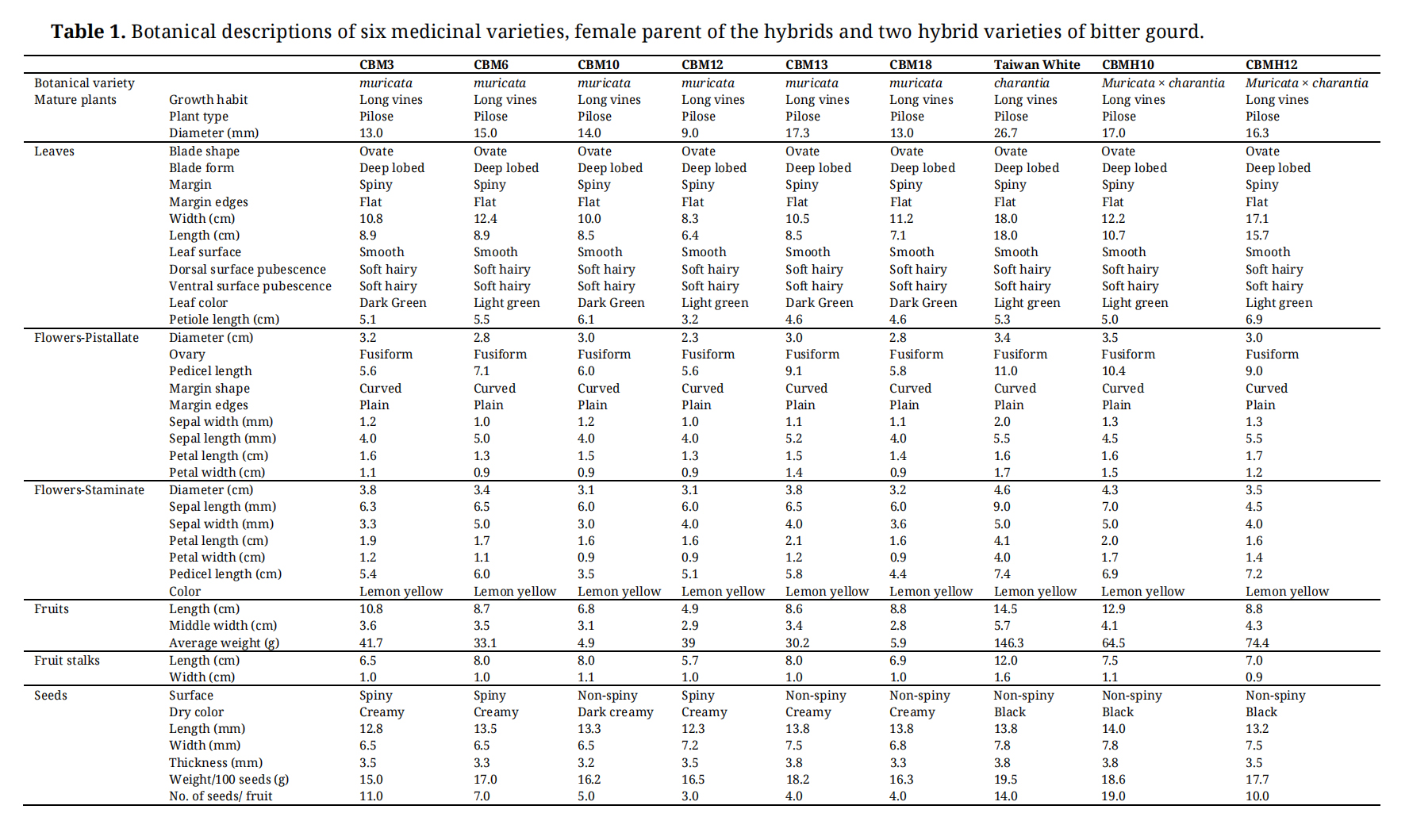 Table 1. Botanical descriptions of six medicinal varieties, female parent of the hybrids and two hybrid varieties of bitter gourd.
Phenotypic traits of five fruit characters including color, surface texture, luster, shape, and apparent size of the eight medicinal varieties and 17 vegetable varieties grown popularly in six Asian countries are presented in Table 2. All the six CBM varieties and the two hybrids bore green, spiny and dull fruits. The nine popular vegetable varieties belonging to the same botanical variety, muricata, had also green, spiny and dull fruits. On the other hand, the eight popular vegetable varieties belonging to the charantia botanical variety had fruits of varied color and luster but all being non-spiny. One of these charantia varieties, viz. Large Top, had dull fruits unlike the other seven varieties bearing glossy fruits. The three Taiwanese varieties, viz. Hybrid White Pearl, Hybrid Taiwan White and Taiwan White, had white fruits, the remaining five charantia varieties having green fruits. Fruit shape was, in general, long except the four muricata varieties, viz. CBM12, Hybrid India Baby, Small Baby and Hybrid Baby Doll, and one hybrid variety, viz. CBMH12. All the six CBM varieties had very small- and small-sized fruits whereas the nine vegetable varieties belonging also to the muricata botanical variety bore very small, small, medium and large fruits. This trait was quantified and is elaborated in the Section, Variation in Fruit Size. The charantia vegetable varieties had either medium or large fruits but one of them, viz., Taiwan White, bore very large fruits. The two hybrids, obviously, bore medium-sized fruits. These five contrasting phenotypic fruit traits are depicted in Figure 1.
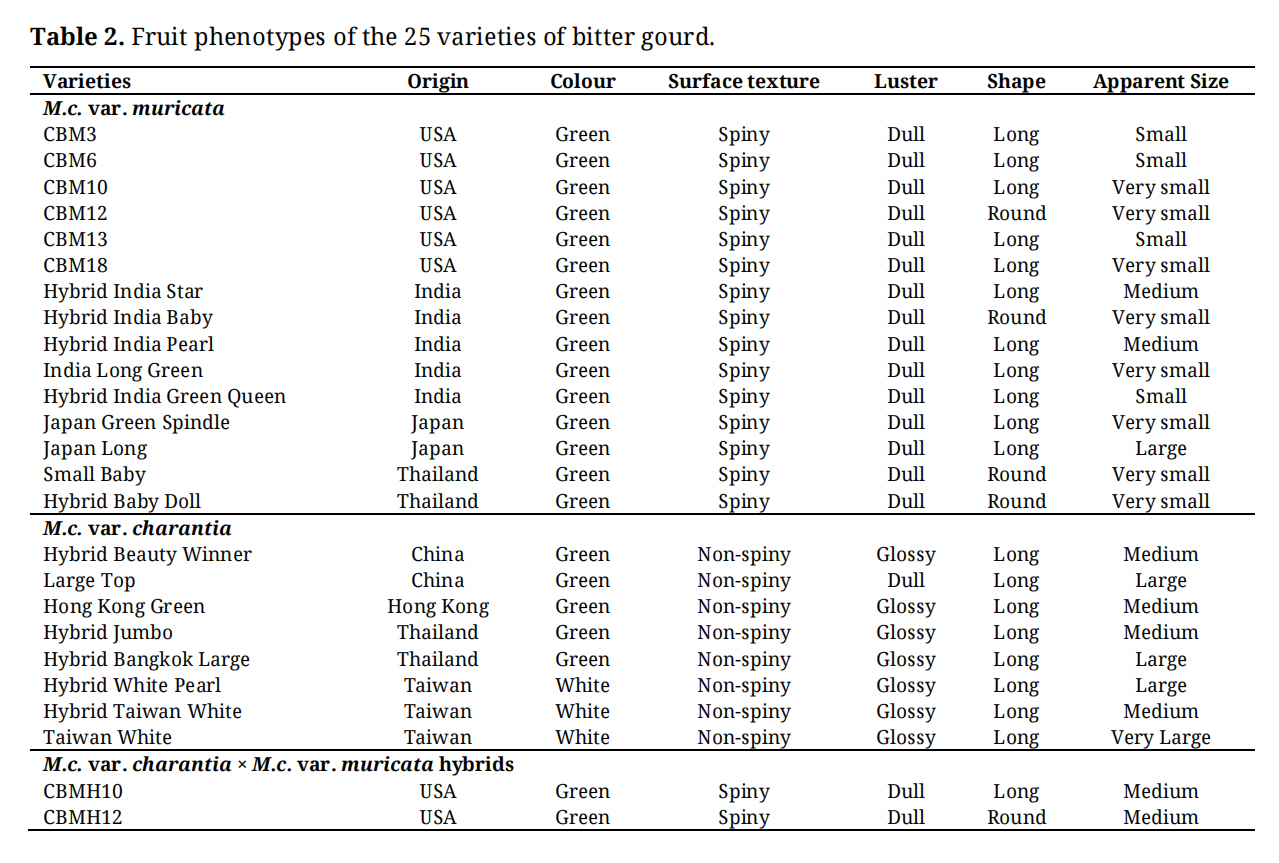 Table 2. Fruit phenotypes of the 25 varieties of bitter gourd.
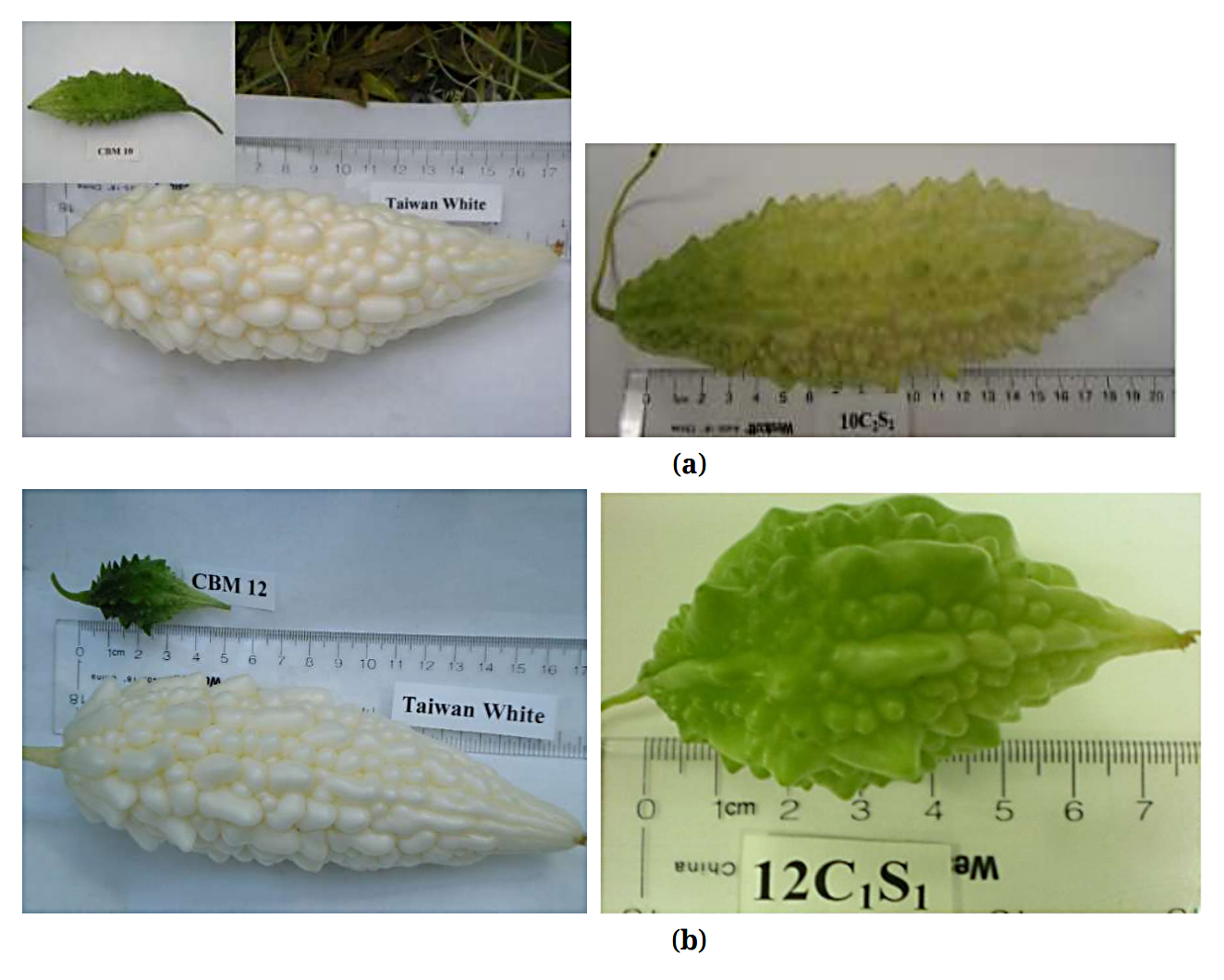 Figure 1. Contrasting fruit traits observed in the 25 varieties of bitter gourd depicted with four representative varieties. (a) The parent varieties, CBM10 and Taiwan White, and their hybrid CBMH10. (b) The parent varieties, CBM12 and Taiwan White, and their hybrid CBMH12.
Statistical analysis of the contents of the three phytomedicines as mg/g of lyophilized powers of fresh fruits of the 25 varieties including the eight CBM varieties and 17 popular vegetable cultivars revealed highly significant variation (Table 3). The contents of cucurbitacin-B were significantly the highest in CBM10 (0.645 mg/g) and CBMH10 (0.615 mg) followed by CBM13 (0.5 mg). CBM18 also had considerable (0.465 mg) cucurbitacin-B content. Two popular vegetable varieties, Hybrid White Pearl and Taiwan White were equally the lowest performing varieties containing 0.12 mg and 0.13 mg, respectively. With respect to charantin, CBMH10 (8.0 mg) again exhibited significantly the highest content closely followed by CBM12 (7.88 mg). One hybrid variety, CBMH12, two CBM varieties, CBM10 and CBM3 along with four popular hybrid vegetable varieties, viz., Hybrid Beauti Winner, Hybrid Jumbo, Hybrid White Pearl and Hybrid India Green Queen had considerable charantin contents. Hybrid India Star (4.2 mg) followed by Hybrid Baby Doll (5.37 mg) had the lowest charantin content. CBMH10 (4.0 mg) had the highest content of plant insulin and was seconded by CBMH12 (0.3 mg) that was closely followed by CBM12 and CBM3 with similar (0.26 mg) content. Four CBM varieties including CBM13 and CBM18 followed by CBM10 and CBM6 had also considerable charantin contents ranging between 0.185 to 0.210 mg. Six cultivars including Hybrid Beauty Winner, Hong Kong Green, Taiwan White, Hybrid Bangkok Large, Hybrid India Star and Hybrid Taiwan White had equally the least (0.11–0.12 mg) plant insulin contents.
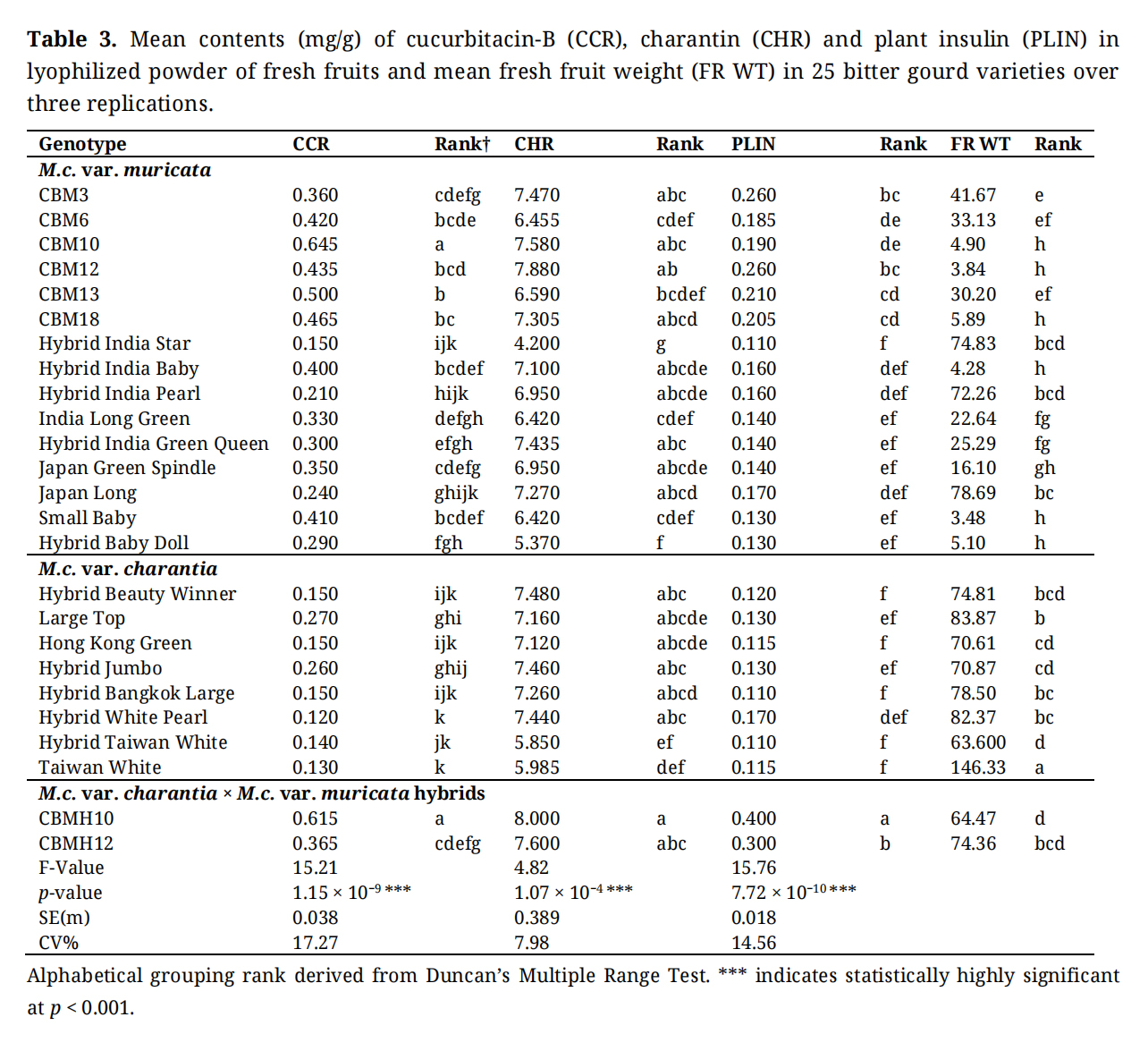 Table 3. Mean contents (mg/g) of cucurbitacin-B (CCR), charantin (CHR) and plant insulin (PLIN) in lyophilized powder of fresh fruits and mean fresh fruit weight (FR WT) in 25 bitter gourd varieties over three replications.
Fruit weight also exhibited highly significant variation among the varieties (Table 3). The varieties belonging to the charantia varieties bore, in general, larger fruits weighing between 63.6 g to 146.33 g. The muricata varieties had varied sizes ranging between 3.84 g to 78.69 g. The six CBM varieties bore smaller fruits weighing between 3.84 g to 41.67 g. Statistically six varieties including CBM12 (3.84 g), CBM10 (4.9 g) and CBM18 (5.89 g) had the smallest fruits whereas Taiwan White (146.33 g) had by far the largest fruits among all. As expected, the two hybrid varieties, CBMH12 (74.36 g) and CBMH10 (64.47 g) had medium sized fruits (Figure 1).
Associations among Phytomedicine Contents and Fruit WeightCorrelation analysis among the contents of three phytomedicines and fruit weight revealed highly significant positive association (r = 0.672) between cucurbitacin-B content and plant insulin content. Charantin content and plant insulin content were also highly and positively correlated (r = 0.518). Interestingly, fruit weight had highly significant negative association with cucurbitacin-B (r = −0.65). Correlations of other combinations were statistically non-significant (Table 4).
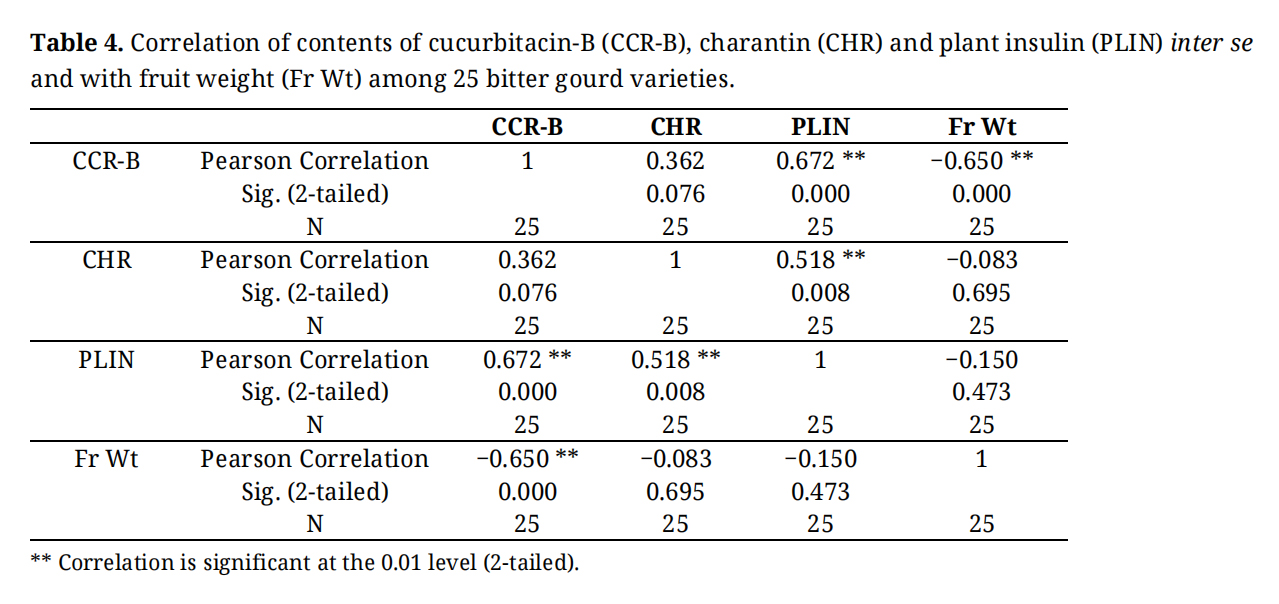 Table 4. Correlation of contents of cucurbitacin-B (CCR-B), charantin (CHR) and plant insulin (PLIN) inter se and with fruit weight (Fr Wt) among 25 bitter gourd varieties.
Several crop plants contain therapeutically and nutritionally important phytochemicals. A recently published compendium deliberated on the biochemistry and medicinal importance of these health-related nutracuticals in 50 different crop plants [1]. It has also presented reviews on traditional breeding, transgenics and molecular breeding for genetic improvement in these crops aiming at the improvement in usual agronomic or horticultural traits such as yield, quality, stress resistance and also content of bioactive phytochemicals with them in a few cases. Similarly, previous breeding programs in bitter gourd, a popular vegetable crop, aimed only at horticultural traits, primarily on fruit yield and stress resistance, and produced varieties to be used for vegetable purposes [24]. On the other hand, our breeding program in bitter gourd was aimed only at higher content of medicinally important bioactive compounds and to develop medicinal crop-varieties. The earlier bitter gourd varieties were developed by using pure-line selection and hybridization [4,9,24]. However, it is not clear whether any of their parent materials belonged to M.c. var. muricata.
M.c var. muricata (syn. M.c. var. abbreviata ser.) is considered to be more potent in disease prevention than its cultivated form [25]. We explored, therefore, a germplasm of wild bitter gourd in our breeding program to develop medicinal varieties. Botanical descriptions of these varieties were as reported earlier specifically having small-sized and spiny fruits and smaller seed size [26–28]. With regard to the phenotypic traits of fruits, the CBM varieties were uniformly green, spiny, dull and small-sized. The two hybrids derived from them were also green, spiny and dull evidencing for dominance of these three traits over white, non-spiny and glossy and supporting the observations of Kole et al. (2012) [29]. They also observed difference in seed color between CBM12 and Taiwan White as observed by us (Table 1). The medium-sized fruits in the two hybrids observed by us substantiate the quantitative nature of fruit weight as observed earlier [29]. However, further genetic studies are required to detect the nature of inheritance of fruit shape although the observation in our work indicates possible dominance of round over long size as the hybrid of CBM12 with round fruits and Taiwan White with long fruits had round fruits. Crossability between M.c. var. charantia and M.c. var. muricata and characterization of their interspecific hybrids based on morphology, pollen-pistil compatibility, cytology, palynology, molecular relation among the parents and hybrids were studied earlier [20,30,31]. But these studies were not meant for detection of the nature of inheritance of economically important traits or development of interspecific hybrid varieties. A recent study reported significant heterosis with regard to charantin content in F1 hybrids of three crosses involving some bitter gourd lines [32]. However, available literature does not provide report on the development of any hybrid variety with enhanced charantin or any other bioactive compounds from the above or any other cross(es).
The eight bitter gourd varieties of the CBM series had, in general, higher contents of all the three anticancer and antidiabetic phytomedicines in comparison to the 17 popularly grown vegetable varieties belonging to both muricata and charantia botanical varieties. Among them, CBMH10 was found to be universally the richest. CBM10 also assumed the first position along with CBMH10 for cucurbitacin-B content and the third position with regard to charantin content. CBM12 ranked second for charantin content and third for plant insulin content while the hybrid derived by using it ranked third for charantin and second for plant insulin. Another CBM variety, viz., CBM13, acquired the second rank with regard to cucurbitacin-B content. None of the remaining 20 varieties ranked first and/or second for any of the three phytomedicines. Therefore, consumption of fresh fruits of the above five varieties and their extracts or powders as functional foods may help in mitigation of the problems of cancer and diabetes. Since diabetes leads also to blindness, kidney failure, heart attacks, stroke and lower limb amputation (https://www.who.int/news-room/fact-sheets/detail/noncommunicable-diseases), use of these varieties as functional foods may help in controlling these diseases. In addition, these varieties may be used as sources for extraction of the three phytomedicines for further pharmaceutical and bioavailability studies with emphasis on their potential use for mitigation of cancer and diabetes. Studies on other phytomedicines in these varieties as reported to be present in bitter gourd [3] and their potential medicinal utilities [4] may also be taken up in future.
Fruit weight is an important factor of fruit yield [22] and thereby total phytomedicine contained in fruits. The CBM varieties had, in general, smaller fruits as compared to the popular cultivars. However, the two hybrids CBMH12 and CBMH10 bore heavier fruits equaling to many popular cultivars. These two hybrids, therefore, emerged as superior to all the varieties considering both medicinal and vegetable purposes and may be recommended as ‘dual-purpose’ varieties.
The correlation study has led to an interesting observation of negative association between fruit weight and cucurbitacin-B content indicating the requirement of compromising fruit yield for utilization of bitter gourd varieties as a source of this anticancer phytomedicine. Another interesting observation was the positive correlation of the contents of the two antidiabetic phytomedicines, charantin and plant insulin suggesting future studies on genetic and biochemical mechanisms underlying their production.
All the CBM varieties were developed by either selection or hybridization, both traditional breeding methods, and so their fruits and fruit products can be safely consumed and these varieties may enjoy acceptance by both the farmers and consumers.
The results from this study demonstrates the importance of developing crop varieties with higher contents of therapeutic bioactives for their use as sources of functional foods aiming at prevention and management of human diseases including cancer and diabetes. They also evidenced that wild crop relatives could be a potential genetic resource for developing medicinal varieties in crops.
The detailed data are not publicly available but we will be happy to share data on reasonable request.
Conceptualization, CK; methodology, CK and PK; validation, CK and PK; formal analysis, CK and PK; investigation, CK and PK; data curation, PK; writing—original draft preparation, CK; writing—review and editing, CK and PK; supervision, CK. Both authors have read and agreed to the published version of the manuscript.
The authors declare no conflicts of interest.
The first author acknowledges USDA National Institute of Food and Agriculture for financial support through the Grant No. 2009-35301-15041 for the original work. The authors declare that no funds, grants, or other support were received during the final analysis, interpretation and preparation of this manuscript.
The authors acknowledge Albert G. Abbott of the Department of Genetics and Biochemistry and Richard K. Marcus of the Department of Chemistry, Clemson University, Clemson, SC, USA for laboratory facilities; Bode Olukolu, while working at the Department of Genetics and Biochemistry, Clemson, SC, USA for assistance in extraction and quantification of phytomedicines; and Deb Sankar Gupta from the Uttar Banga Krishi Viswavidyalaya, India for assistance in statistical analysis.
1.
2.
3.
4.
5.
6.
7.
8.
9.
10.
11.
12.
13.
14.
15.
16.
17.
18.
19.
20.
21.
22.
23.
24.
25.
26.
27.
28.
29.
30.
31.
32.
Kole C, Kole P. Development of the First Medicinal Crop-Varieties with Enhanced Bioactive Compounds from Bitter Gourd (Momordica charantia L.). Crop Breed Genet Genom. 2026;8(2):e260012. https://doi.org/10.20900/cbgg20260012.

Copyright © Hapres Co., Ltd. Privacy Policy | Terms and Conditions



